Men's aesthetics is becoming a more common topic of conversation, yet knowing where to begin can still feel unfamiliar for many.
You might have started noticing changes in your facial appearance, become more aware of hair thinning, or simply found yourself wondering why certain things look different compared to a few years ago.
These observations are a normal part of life, but understanding what may be contributing to them isn't always straightforward.
With so much information available online, it can be difficult to separate general advice from information that is relevant to your own circumstances.
That's why I believe the conversation around men's aesthetics should start with education, not assumptions about what needs to change.
"Understanding what you're noticing is often the first step towards making informed decisions about your personal care."
What Does Informed Consent Mean?
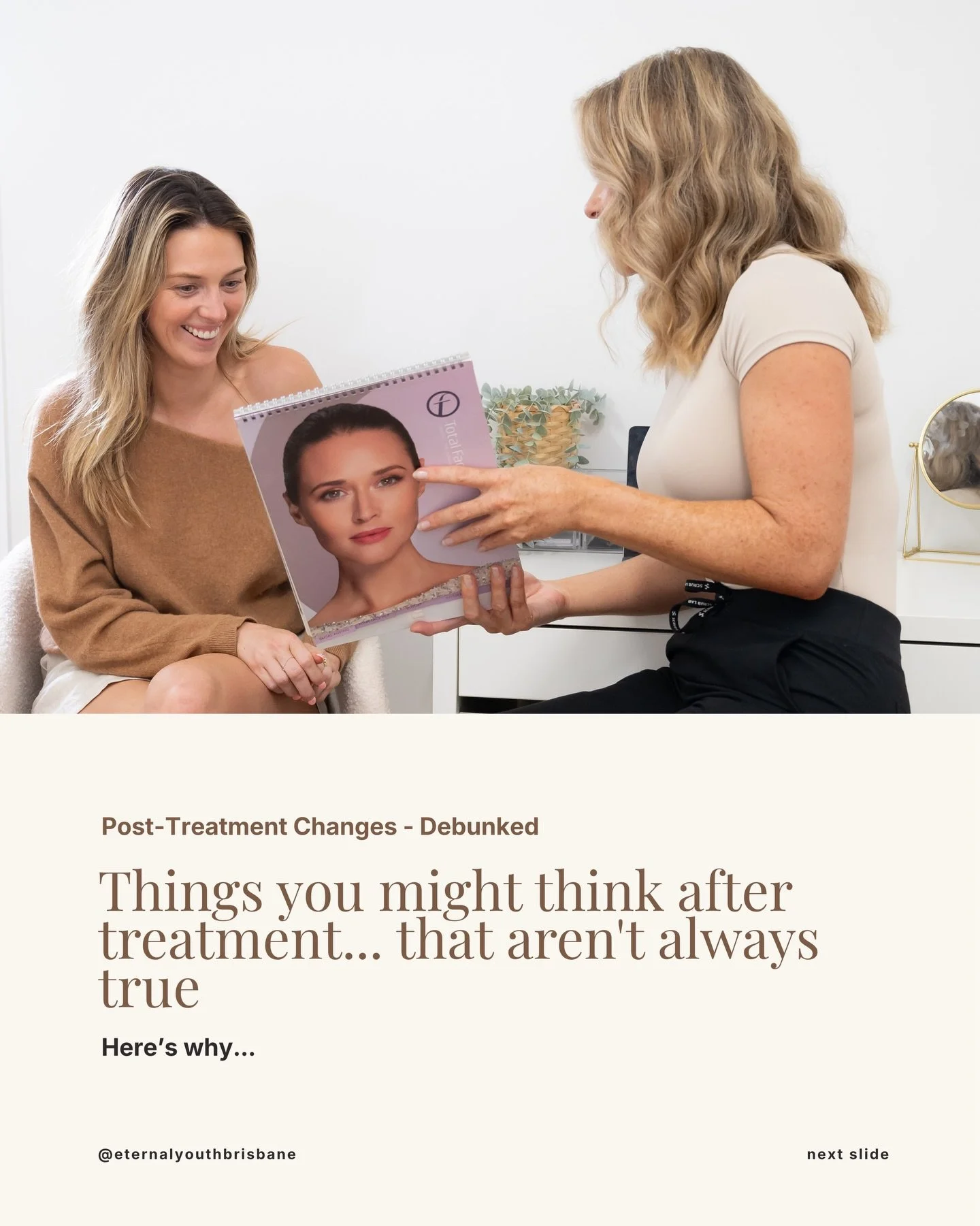
Informed consent means you should receive appropriate information about a proposed treatment before making a decision.
Depending on the treatment and your individual circumstances, this may include discussing:
What the treatment involves
Why it has been recommended
Potential risks and side effects
What you may experience afterwards
Expected recovery or aftercare
Alternative treatment options
The option of choosing not to proceed
Any factors that may affect your suitability
The purpose isn't to overwhelm you with information.
It's to make sure you have enough relevant information to make a decision that is appropriate for you.
Why Is Informed Consent Important for Aesthetic Treatments?
Aesthetic treatments are still clinical procedures, even when they are non-surgical.
That means they should be approached with the same consideration for suitability, safety, potential risks and individual circumstances as any other clinical treatment.
It can sometimes be easy to think differently about aesthetic procedures because they are often discussed casually online or presented as quick treatments.
But social media doesn't provide the same personalised assessment that takes place during a clinical consultation.
Your medical history, current medications, allergies, previous treatments and individual circumstances can all be relevant when determining whether a treatment may be suitable.
"A treatment being popular doesn't automatically make it appropriate for everyone."
This is one of the reasons informed consent and individual assessment are such important parts of aesthetic care.
Understanding the Potential Risks and Side Effects
No clinical treatment is completely without risk.
Before proceeding, you should have the opportunity to understand the potential risks and side effects associated with the treatment being considered.
The information will vary depending on the procedure.
Some treatments may involve temporary redness, swelling, sensitivity or other expected effects during recovery. Other procedures may have different risks that need to be discussed before treatment.
Your practitioner should explain the relevant information for the treatment being considered and give you the opportunity to ask questions.
Understanding potential risks doesn't mean that something will necessarily go wrong.
It means you are making your decision with a clearer understanding of what the treatment involves.
You Should Have the Opportunity to Ask Questions
You don't need to know everything about an aesthetic treatment before your appointment.
In fact, asking questions is an important part of the consultation process.
You may want to ask:
"Why has this treatment been recommended?"
"What are the potential side effects?"
"What should I expect afterwards?"
"Are there alternatives?"
"What happens if I decide not to proceed?"
These are all reasonable questions.
A good consultation should give you the opportunity to discuss anything you're unsure about before making a decision.
"There is no such thing as a silly question when it comes to your treatment and your care."
Informed Consent Means You Can Make Your Own Decision
Another important part of informed consent is that the decision should be yours.
You should have the opportunity to consider the information provided and decide whether you want to proceed.
You shouldn't feel that you have to agree to treatment because you've already booked a consultation, because you've seen a promotion, or because someone else has recommended the same procedure.
You can ask for more information.
You can take time to think about your options.
And you can choose not to proceed.
"A consultation should give you clarity, not pressure."
This is particularly important in aesthetic medicine, where treatments are generally elective rather than something you have to undergo immediately.
Your Treatment Plan Should Be Individualised
Informed consent is closely connected to personalised treatment planning.
Before recommending an aesthetic treatment, it's important to consider the individual rather than simply the treatment itself.
At Eternal Youth Brisbane, this means taking the time to understand your concerns, medical history, goals and individual circumstances.
A treatment that may be appropriate for one person may not necessarily be suitable for another.
Similarly, there may be more than one approach to consider, or treatment may not be recommended at all.
The purpose of a consultation is to explore these considerations before you make your decision.
Consent Isn't a One-Time Conversation
Informed consent isn't necessarily something that happens once and is then forgotten.
If your treatment plan changes, if a different procedure is being considered, or if new information becomes relevant, there may be a need to revisit the discussion.
You should have the opportunity to understand what is being proposed and ask questions before proceeding.
This is part of maintaining clear communication throughout your aesthetic treatment journey.
What Happens If You Change Your Mind?
You are allowed to change your mind.
Even after discussing a treatment, you may decide that you aren't ready to proceed or that you'd like more time to consider your options.
That's okay.
Making an informed decision doesn't mean deciding immediately.
Sometimes, the most appropriate next step is to take the information away, think about it and return with any additional questions.
At Eternal Youth Brisbane, we believe there should be no pressure to make a decision simply because you've attended a consultation.
Choosing an Aesthetic Clinic in Brisbane
When considering non-surgical aesthetics in Brisbane, it's worth looking beyond the treatment itself.
Consider whether the clinic takes the time to discuss your individual circumstances, explains relevant risks and side effects, answers your questions and provides clear information before treatment.
A consultation should be a two-way conversation.
You should feel comfortable asking questions and have enough information to make a decision that feels appropriate for you.
"Good aesthetic care isn't simply about the treatment. It's also about how you're informed, supported and cared for throughout the process."
Final Thoughts
Informed consent is an important part of responsible aesthetic care.
It gives you the opportunity to understand what a treatment involves, consider potential risks and side effects, discuss alternatives, ask questions and make your own decision about whether to proceed.
Non-surgical doesn't mean non-clinical.
Aesthetic treatments should still be approached thoughtfully, with appropriate assessment, clear communication and respect for your individual circumstances.
At Eternal Youth Brisbane, we believe good aesthetic care starts with understanding.
Before deciding whether a treatment is right for you, you should have the information you need to make an informed choice.
Because the most important part of any aesthetic treatment isn't simply deciding what to do.
It's understanding why you're doing it, what it involves, and feeling comfortable with the decision you've made.
Why Are More Men Talking About Aesthetics?
For a long time, aesthetic care was often discussed primarily in relation to women. Today, more men are openly exploring ways to understand changes in their appearance and learn about the options available to them.
There isn't one reason behind this.
Some men become curious after noticing gradual changes as they get older. Others want to understand concerns that have developed over time or simply prefer to be more informed about their personal care.
For many, the interest begins with a question rather than a specific goal.
It might be wondering why the face appears different, why hair seems less dense, or whether a change is simply part of the natural ageing process.
These are valid questions, and they don't automatically mean that anything needs to be addressed.
The important thing is understanding the individual concern rather than feeling that you need to follow a particular trend or standard.
Common Concerns Men May Notice Over Time
Everyone experiences changes differently. Genetics, age, lifestyle, hormonal factors and general health can all influence aspects of appearance.
While every individual is different, there are several concerns that commonly lead men to seek more information.
1.Changes in Facial Appearance
As we age, gradual changes can occur in facial structure, collagen, volume and overall appearance.
You may notice differences around the eyes, cheeks or jawline, or feel that your facial features look different from how you remember them.
These changes don't necessarily happen at the same pace for everyone.
Understanding the factors that may contribute to them can help put things into perspective, particularly when deciding whether further advice would be useful.
2.Hair Thinning and Hair Growth Concerns
Hair thinning is another concern that can prompt men to seek information as they get older.
Some men notice gradual changes in hair density, while others become aware of a receding hairline or changes in particular areas of the scalp.
There can be several contributing factors, including genetics, hormonal influences, certain medical conditions and nutritional factors.
Because the causes can differ, it's important not to assume that every type of hair thinning has the same explanation or requires the same approach.
If you've noticed changes in your hair growth, seeking appropriate professional advice can help you better understand the possible causes and what options may be worth exploring.
3.Changes in Skin Texture and Appearance
Changes in texture, fine lines and overall appearance can also become more noticeable over time.
Sun exposure, genetics, lifestyle and natural ageing may all play a role.
Rather than assuming that a particular change requires attention, it can be helpful to understand what may be contributing to it and whether any further assessment is appropriate.
Understanding What Is Normal for You
One of the challenges with aesthetic information online is that it often presents a single concern as though everyone experiences it in the same way.
In reality, there is considerable individual variation.
Two men of the same age may have very different experiences because of genetics, health, lifestyle and other personal factors.
This is why comparing your appearance with someone else's isn't always helpful.
A change that is noticeable to one person may not be a concern for another. Equally, something that appears similar on the surface may have a different underlying cause.
"There isn't one standard for how men should age. Understanding your own circumstances is far more useful than comparing yourself with someone else."
The aim is not to create a list of things you should change. It's to give yourself the opportunity to understand what you're noticing and decide whether you would like further guidance.
The Role of Lifestyle and General Wellbeing
Appearance doesn't exist in isolation from the rest of your life.
Sleep, nutrition, stress, sun exposure and general health can all influence different aspects of how we look and feel over time.
Hair changes, in particular, can sometimes be associated with underlying health factors, which is why persistent or sudden changes may warrant assessment by an appropriate healthcare professional.
Looking at lifestyle and wellbeing can provide useful context, but it is important not to assume that every concern can be explained by lifestyle alone.
If something has changed noticeably or unexpectedly, professional assessment may help clarify what could be contributing to it.
Why Understanding Your Concerns Comes First
When you begin exploring men's aesthetics, it can be tempting to search for an immediate answer online.
You might come across different opinions, personal experiences and recommendations, all suggesting different approaches.
The difficulty is that general information cannot account for every individual's circumstances.
Before deciding what to do, it helps to identify what you're actually concerned about, how long you've noticed the change, and whether there are other factors worth considering.
For some concerns, a discussion with an appropriately qualified healthcare professional may be the most useful starting point. For others, an aesthetic consultation may help you understand the available options and whether they are appropriate for you.
The key is choosing the right starting point for the concern itself.
A More Personal Approach to Men's Aesthetics
At Eternal Youth Brisbane, I believe aesthetic care should begin with understanding the person, not simply focusing on a particular feature or concern.
That means taking the time to listen, discuss your goals and consider your individual circumstances before making any recommendations.
You don't need to arrive with all the answers, and you don't need to know exactly what you want to do.
Sometimes, the most useful first step is simply having a conversation and gaining a clearer understanding of your options.
There should be no expectation to pursue a particular approach just because you've booked a consultation.
Any recommendations should be based on individual assessment, suitability and an informed discussion about the potential benefits, limitations and risks.
"Good aesthetic care starts with listening, understanding and helping you make informed decisions at your own pace."
Final Thoughts
Men's aesthetics isn't about following trends or changing your appearance to fit someone else's expectations.
It can simply be an opportunity to understand the changes you've noticed, learn more about your options and make informed decisions about your personal care.
Whether your questions relate to facial changes, hair thinning or another concern, the starting point should always be understanding what may be contributing to it.
At Eternal Youth Brisbane, we believe every person's circumstances deserve individual consideration.
If you've been curious about men's aesthetics but aren't sure where to begin, a conversation can help you explore your questions and determine what type of guidance may be appropriate for you.
Because you don't need to have a treatment in mind to start asking questions. Sometimes, understanding is the most useful place to begin.

Follow our socials
〰️
Follow our socials 〰️